
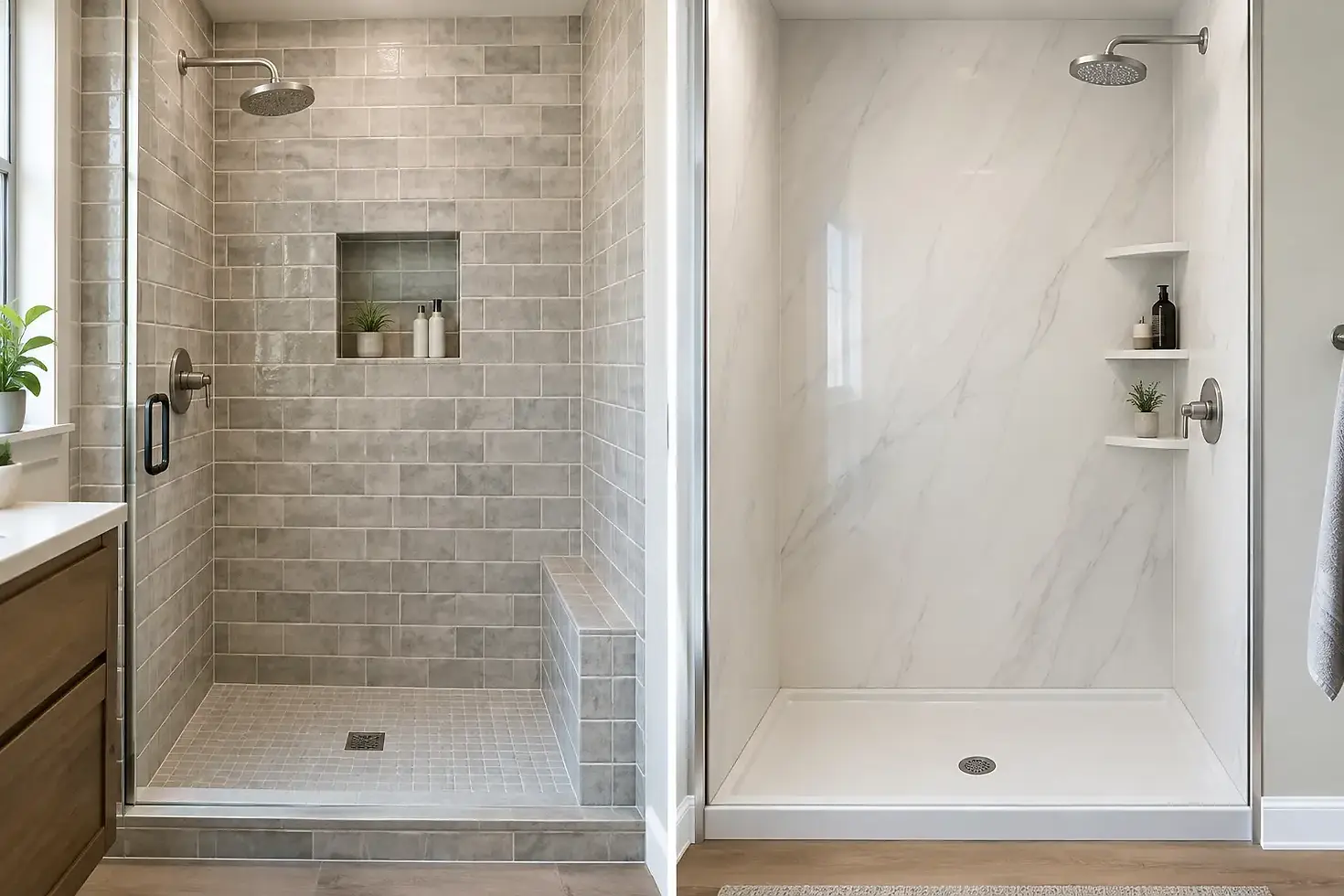
Tile Shower Versus Panels: Which Holds Up?
A tile shower versus panels decision usually comes down to more than appearance. The real question is how the walls will perform after years of daily moisture, cleaning, use, and movement in the home. Both options can create a clean, functional shower, but they are built differently, age differently, and call for different levels of installation skill.
For homeowners planning a bathroom remodel, the best choice depends on the condition of the space, the desired finish, the budget, and how long the renovation is expected to last. A quick material comparison can be useful, but the installation behind the finished wall matters just as much as the surface you see.
Tile Shower Versus Panels: The Core Difference
A tile shower is a site-built assembly. The installer prepares the framing, builds or adjusts the shower pan, installs an approved waterproofing system, sets the tile, and finishes the joints with grout and sealant where needed. It can be designed around nearly any room size, layout, drain location, niche, bench, or accessibility requirement.
Shower panels are large, prefinished wall surfaces. They may be acrylic, fiberglass, cultured marble, solid surface, or composite materials. Depending on the product, panels are installed over prepared walls or used as part of a coordinated shower surround system. Their main advantage is fewer joints and a faster finished appearance.
Neither system is automatically better in every bathroom. A well-installed panel system is far more reliable than a poorly waterproofed tile shower. At the same time, a properly built tile shower provides design flexibility and repair options that many panel systems cannot match.
Waterproofing Is the Deciding Factor
A shower is not protected simply because it has tile on the walls. Tile and grout are finish materials, not the complete waterproofing system. Water can reach the area behind tile through grout joints, changes of plane, penetrations, or small cracks if the shower assembly has not been properly prepared.
A quality tile shower needs a continuous waterproof layer behind or directly beneath the tile. The shower floor, curb, corners, wall transitions, niches, plumbing penetrations, and drain connection all need to work as one system. This is where experienced tile installation makes a measurable difference. A shower can look excellent on the day it is completed and still develop expensive problems if the waterproofing details were skipped.
Panels have an advantage in joint reduction. A large panel may cover an entire wall with few seams, reducing the amount of grout and limiting places where water can enter. However, panel seams, edges, fixtures, and the connection to the shower base still need correct preparation and sealing. Caulk is a maintenance joint, not a substitute for proper wall preparation.
For either option, the contractor should address the condition of the framing and substrate before installation begins. Walls that are out of plumb, water-damaged, or not properly supported can affect both the finished appearance and the long-term performance of the shower.
Cost: Upfront Price and Long-Term Value
Panels often cost less to install in a straightforward replacement project because they require less layout work, fewer individual pieces, and less grout finishing. They can be a practical choice for a guest bath, rental property, or remodel with a tight schedule. Basic surrounds tend to be among the more budget-conscious options.
Tile has a wider price range. A simple ceramic or porcelain tile can be cost-effective, while large-format porcelain, natural stone, mosaics, custom niches, benches, decorative borders, and complex patterns add labor and material expense. The waterproofing and shower-pan work also represent an investment that should not be treated as an optional upgrade.
The lower initial price is not always the lower lifetime cost. If a panel cracks, fades, or becomes difficult to match after damage, replacement may involve changing an entire wall or surround. With tile, a localized repair can sometimes be made by replacing individual pieces, provided matching tile is available. That said, grout maintenance and occasional re-caulking should be included in a tile shower's long-term ownership expectations.
Design Flexibility and Property Appeal
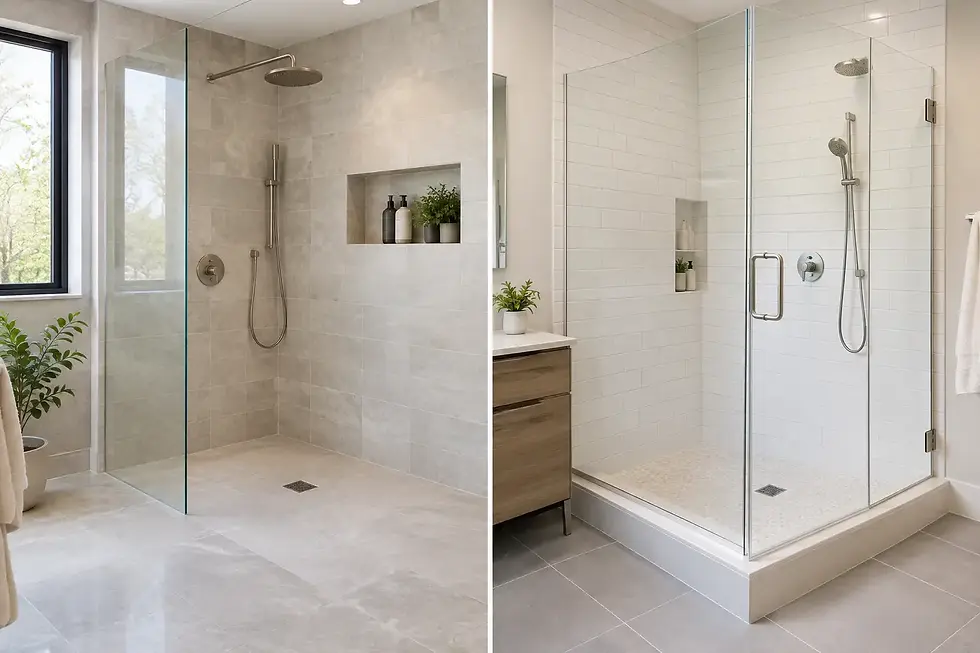
Tile gives homeowners more control. It can be installed in nearly any color, size, texture, and pattern, from a clean large-format porcelain look to a detailed mosaic floor. It also works well for custom shower footprints, recessed niches, built-in benches, curbless entries, and walls that do not fit standard panel dimensions.
This flexibility matters in older homes and higher-end remodels, where walls may not be perfectly square and the shower is a visual focal point. Tile can be designed to connect the shower to the bathroom floor, vanity backsplash, or adjacent finishes without looking like a separate prefabricated unit.
Panels offer a more limited but increasingly attractive range of finishes. Solid-surface and cultured-marble options can create a clean, modern look with large slab-like surfaces. They are especially useful when the goal is a simple shower with minimal visual interruption. For clients who prefer a crisp, low-maintenance finish over custom detail, that simplicity can be the right design decision.
Natural stone deserves extra consideration. It can create a premium result, but it requires material-specific care and should be selected with a clear understanding of sealing, cleaning, and maintenance requirements. Porcelain often delivers a similar visual impact with easier daily care.
Cleaning and Maintenance Expectations
The most noticeable maintenance difference is grout. Tile showers have grout joints, and smaller tile means more of them. Grout does not have to be difficult to live with, but it should be cleaned regularly with products appropriate for the tile and grout. Harsh acids, abrasive pads, and inconsistent cleaning can wear down surfaces and affect sealant joints.
Large-format tile reduces the number of grout lines while maintaining the custom look of a tile installation. It is a popular middle ground for homeowners who want tile but do not want a heavily jointed surface.
Panels are generally faster to clean because they have fewer seams. A nonabrasive cleaner and soft cloth are usually enough for routine maintenance, although product recommendations vary by material. Acrylic and fiberglass can scratch more easily than tile or solid surface, while certain panel finishes may show dull spots if cleaned with unsuitable products.
Every shower, regardless of wall material, needs routine attention at corners and transitions. Flexible sealant at changes of plane can eventually need replacement. Catching failed caulk early is much less expensive than waiting for moisture to affect the wall assembly behind it.
Durability in a Busy Household
Porcelain tile is highly durable and well suited to heavily used primary bathrooms, family homes, and commercial restroom applications when paired with the right installation system. It resists moisture, scratching, and everyday wear. The weak point is rarely the tile itself. Problems usually begin with inadequate substrate preparation, poor waterproofing, weak movement-joint planning, or improper installation around fixtures and corners.
Panel durability depends heavily on the specific material. Solid-surface panels can be durable and repairable in some cases. Fiberglass and acrylic surrounds can serve well for many years, but they may flex, scratch, or crack if installed over unsupported or uneven surfaces. A low-cost panel installed quickly over an unresolved wall problem is not a durable solution.
For a bathroom intended to support long-term property value, custom tile often offers the stronger return because it can be tailored to the room and repaired or refreshed over time. For a functional remodel where speed, simple cleaning, and controlled cost are the priorities, a quality panel system may be the more practical fit.
Choosing the Right System for Your Bathroom
Choose panels when the shower layout is standard, the remodel timeline is short, and low-maintenance cleaning is a high priority. Panels also make sense when a homeowner wants a clean replacement without investing in extensive customization.
Choose tile when the shower requires a custom size or shape, when design detail matters, or when the project includes features such as a niche, bench, linear drain, or curbless entry. Tile is also the better fit when the bathroom is part of a broader renovation where finishes need to work together.
Before selecting either material, make sure the estimate addresses demolition, wall repair, substrate preparation, waterproofing, shower-pan work, fixture coordination, and finish details. Comparing only the visible material can leave out the work that determines whether the shower performs correctly.
A shower should feel like a finished part of the home, not a surface hiding unanswered questions. Empire Tile & Stone approaches custom shower work with that standard in mind: correct preparation first, precise installation next, and a finish built to hold up to daily use.


Comments