
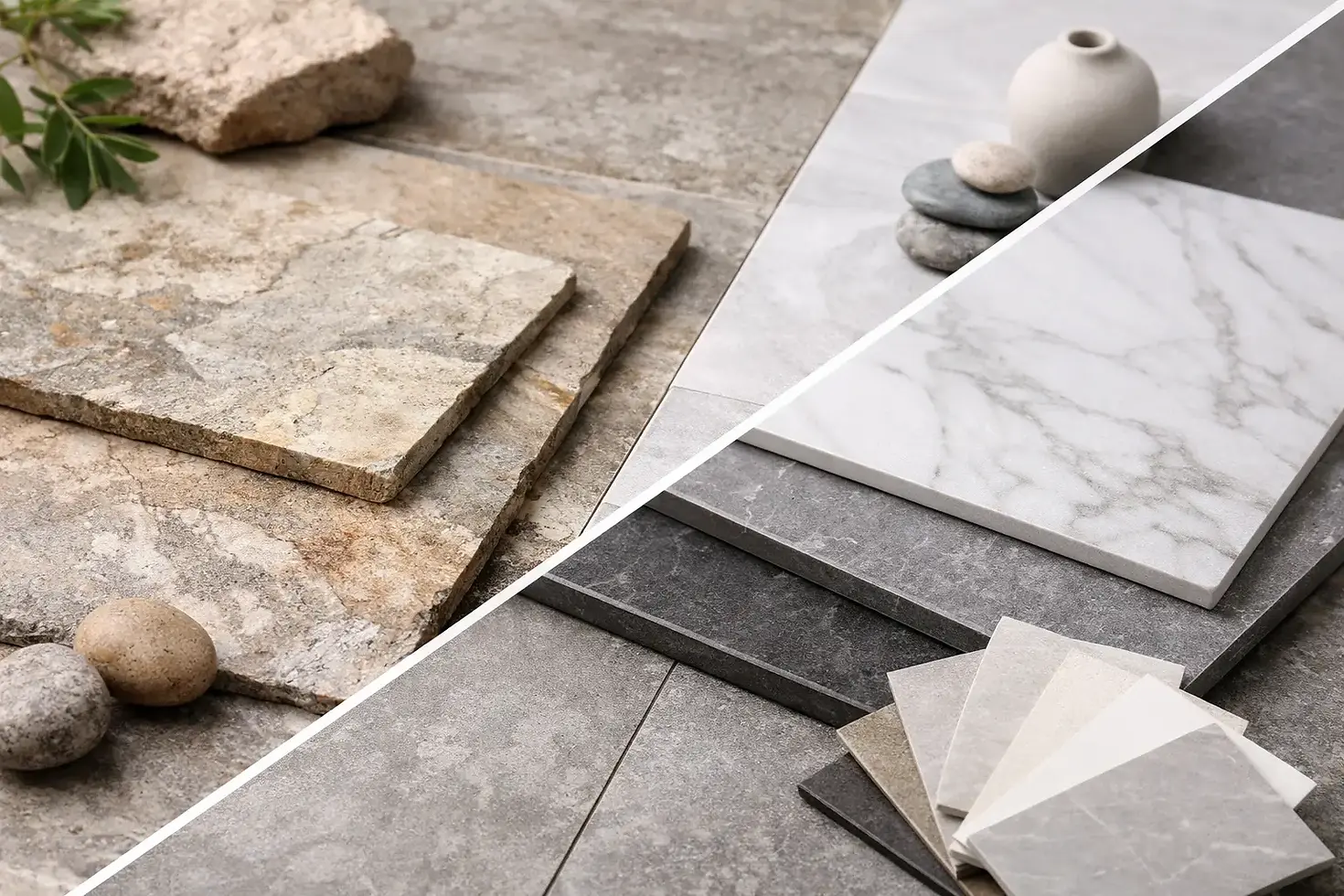
Natural Stone vs Porcelain: Which Tile Fits?
A honed marble bathroom floor and a marble-look porcelain floor can appear similar from across the room. After a few years of daily use, their differences become much clearer. In the natural stone vs porcelain decision, the right choice depends on more than color or a showroom sample. It comes down to the room, expected traffic, maintenance habits, budget, and the quality of the installation beneath it.
Natural stone brings material character that cannot be copied exactly. Porcelain offers dependable performance with far fewer maintenance demands. Both can produce an exceptional result when the surface, preparation, layout, and finishing details are handled correctly.
Natural Stone vs Porcelain: The Core Difference
Natural stone is quarried material. Marble, travertine, limestone, slate, granite, and quartzite each have their own mineral makeup, density, movement, veining, and surface behavior. No two pieces are identical. That variation is part of the value, but it also means selection and layout require a trained eye.
Porcelain is a manufactured tile fired at high temperatures. Quality porcelain is dense, low-absorption, and available in a wide range of finishes, sizes, and visuals. Modern porcelain can closely resemble marble, limestone, wood, concrete, and other natural materials while delivering more uniform color and predictable performance.
This is not simply a question of real material versus imitation. A natural stone installation can feel refined and lasting, while porcelain can be the smarter technical choice for a busy shower, rental property, restaurant floor, or outdoor patio. The best material is the one that fits the conditions it will actually face.
Appearance: Character or Consistency
Stone has depth that comes from nature. Veins run through the material, subtle shifts occur from tile to tile, and a honed or textured finish develops a distinct feel underfoot. For homeowners building a high-end primary bathroom, fireplace surround, or entry floor, those details can make stone the focal point of the space.
That beauty also requires selection. A sample may not represent the full range in a shipment of stone. Before installation, tile should be opened, reviewed, and dry-laid when appropriate so strong veins, color shifts, and natural pits are distributed intentionally. This is especially important with travertine, slate, and highly veined marble.
Porcelain provides more control. If a project calls for a clean, consistent marble look across a large kitchen or commercial lobby, porcelain can deliver it with fewer visual surprises. Large-format porcelain also reduces grout lines, which creates a more continuous appearance. The trade-off is that even the best printed or through-body porcelain may not have the same visual depth as a natural slab or carefully selected stone tile.
Durability and Daily Wear
Porcelain is generally the easier surface to live with. Its low water absorption helps it resist staining and moisture, making it a strong option for shower walls, bathroom floors, kitchens, mudrooms, and high-traffic commercial spaces. Many porcelain products are also rated for outdoor use, although the specific tile, finish, setting materials, and site conditions still need to be verified.
Natural stone varies widely. Granite and quartzite are typically harder and more resistant to wear than marble or limestone. Slate can perform well in the right setting, particularly when its natural cleft texture is desirable. Marble and limestone are softer and can etch when exposed to acidic products such as vinegar, citrus, wine, or certain bathroom cleaners. Etching is not always a structural problem, but it can change the finish and stand out on polished material.
Stone can last for generations, but it should be chosen honestly. A polished marble kitchen floor in a home with active children and dogs may show wear sooner than a porcelain alternative. That patina can be welcome in a traditional home. For an owner who expects the surface to look nearly unchanged with minimal effort, porcelain is usually the safer choice.
Maintenance Is Part of the Material Decision
Natural stone needs routine care and, in most cases, periodic sealing. Sealer does not make stone maintenance-free or completely stain-proof. It helps slow absorption so spills can be cleaned before they penetrate. The correct sealer and schedule depend on the stone, finish, location, and amount of use.
Daily care should be simple: sweep abrasive grit, wipe spills promptly, and use a pH-neutral cleaner made for stone. Avoid harsh acids, bleach-heavy products, and abrasive pads unless a stone professional has recommended them for a specific restoration task. Shower stone also needs attention to soap residue and ventilation.
Porcelain does not typically require sealing, and its cleaning routine is more forgiving. Grout is still a maintenance item, particularly on floors and shower installations. Selecting an appropriate grout, using proper joint sizing, and keeping the surface clean will have more impact on long-term appearance than the tile material alone.
Installation Quality Matters as Much as the Tile
A premium tile cannot correct an uneven subfloor, weak wall framing, poor waterproofing, or improper movement joints. This is where material selection and workmanship meet.
Large-format porcelain needs a flat substrate, correct trowel coverage, and careful handling to prevent lippage, hollow spots, and cracked corners. Some porcelain is difficult to cut cleanly without the right equipment. Rectified edges allow tighter grout joints, but they also make surface preparation and layout accuracy more demanding.
Stone has its own requirements. It may need additional floor stiffness because some stones are more sensitive to movement. Thickness can vary between pieces, requiring more time to set the finished surface flat. Certain translucent marbles may need white setting materials so darker mortar does not affect their appearance. Resin-backed stone, moisture-sensitive stone, and exterior applications also call for product-specific installation methods.
In wet areas, waterproofing is non-negotiable regardless of whether the finish is porcelain or stone. A shower is a system, not just a tile surface. Proper slope to the drain, waterproofing continuity, drain integration, corner treatment, and flood testing protect the structure behind the finished walls and floor.
Cost: Look at the Installed Price, Not Just the Tile
Porcelain often starts at a lower material cost than premium natural stone, but that is not a rule. Designer large-format porcelain, specialty finishes, and complex patterns can raise the product price. Installation labor may also increase when tiles are oversized, require detailed miters, or need extensive substrate flattening.
Natural stone can range from accessible travertine to expensive marble or quartzite. The installed cost commonly reflects more than the tile itself: material sorting, sealing, custom cuts, edge finishing, additional structural preparation, and careful layout all add labor. A stone project should be priced with enough time for those details rather than treated as a standard tile installation.
For a value-focused remodel, porcelain often delivers the strongest balance of appearance, durability, and predictable maintenance. For a feature space where one-of-a-kind character is the goal, natural stone may justify the added investment. Asking for an estimate based on the complete installation scope gives a more useful comparison than comparing per-square-foot tile prices alone.
Choosing by Room and Project Type
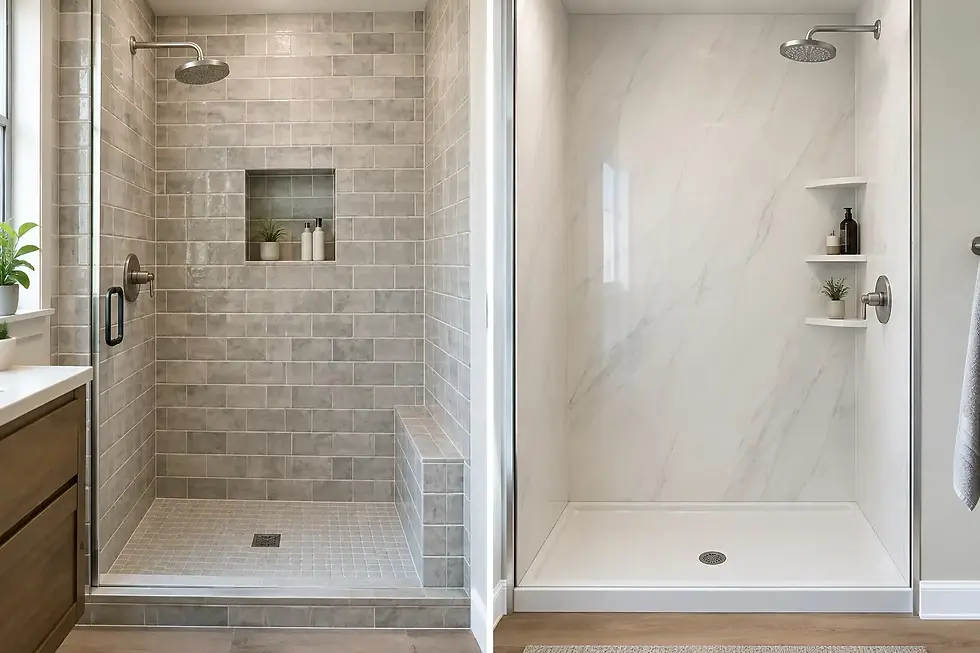
For shower walls, both materials can work well. Porcelain is usually the lower-maintenance choice, while stone offers a more custom, organic finish for owners prepared to maintain it. On shower floors, slip resistance, mosaic size, drainage slope, and grout joints matter more than visual preference alone.
For kitchen backsplashes and fireplace surrounds, the decision is often primarily aesthetic because these areas receive less foot traffic. Natural stone can create a distinctive focal point, while porcelain offers a controlled look with less concern about staining or heat-related maintenance. Always confirm the specific product is suitable for the intended fireplace application.
For busy interior floors, porcelain is hard to beat. It performs well in entryways, kitchens, hallways, and commercial spaces where sand, spills, and frequent cleaning are expected. Stone can be a strong flooring choice in the right home, but the finish should match the use. Honed or textured stone generally hides wear better than polished stone.
For California patios and outdoor living areas, do not choose based on appearance alone. Direct sun, heat, rain exposure, drainage, and slip resistance all matter. In the Central Valley and Bay Area, a qualified installer should evaluate the existing slab, drainage conditions, movement joints, and the tile's exterior rating before work begins.
Make the Choice With the Full Scope in Mind
Bring actual samples into the space and view them in morning light, evening light, and the room's installed lighting. Consider how the material will feel after years of use, not only how it photographs on the first day. A good contractor can also identify preparation needs that may affect the budget before demolition starts.
Empire Tile & Stone approaches material selection as part of the complete installation plan. Whether the project calls for durable porcelain or carefully installed natural stone, the goal is the same: a finish that looks right, performs correctly, and is built on proper preparation. Choose the surface that fits your lifestyle, then give it the craftsmanship required to earn its place in the home.


Comments