

How San Jose Tile Installers Protect Your Investment
A tile surface can look finished on installation day and still fail months later. Loose floor tile, cracked grout, stained shower walls, and uneven lines usually trace back to work hidden beneath the finished surface. That is why choosing San Jose tile installers is about more than finding a crew that can set attractive tile. It is about hiring a qualified contractor who understands preparation, waterproofing, layout, and the demands of the space.
For homeowners, builders, and property managers, tile is often a long-term investment. A properly installed shower, kitchen backsplash, patio, or commercial floor should perform well under daily use while maintaining a clean, precise appearance. The installer’s process determines whether that investment holds up.
Good Tile Work Starts Before Tile Is Set
The most important parts of a tile project are often the least visible. Before tile is installed, the substrate must be evaluated for flatness, structural movement, moisture exposure, and overall condition. Tile is rigid. If the surface below it is weak, uneven, or improperly prepared, the finished tile can crack, shift, or develop hollow spots.
A professional installer does not treat every surface the same. Concrete slabs, wood subfloors, cement board, drywall, exterior decks, and shower walls each require different preparation methods. A bathroom floor may need leveling before installation. A wood-framed floor may need an uncoupling or crack-isolation system. An exterior patio needs attention to drainage, slope, and weather exposure.
This is where lower bids can become costly. A price that leaves out demolition, surface correction, waterproofing, or proper setting materials may look appealing at first. It can also shift necessary work into change orders later or leave critical steps incomplete. A detailed estimate should make the scope clear before work begins.
Waterproofing Is Not an Optional Shower Upgrade
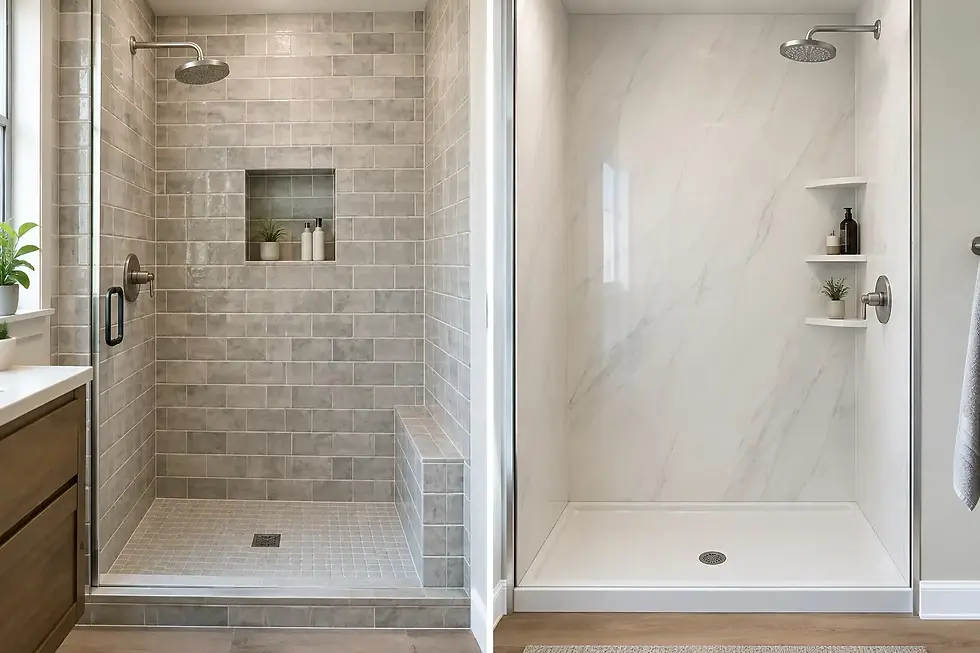
In a shower, tile and grout are finish materials. They are not the waterproof barrier. Water can pass through grout joints, small cracks, and penetrations around fixtures. The protection needs to be installed behind or beneath the tile system, with careful treatment at corners, seams, niches, benches, curbs, and plumbing openings.
A well-built custom shower starts with a proper waterproofing plan. Depending on the design and substrate, that can include a sheet membrane, liquid-applied membrane, or a complete shower system built for the application. The floor must also be sloped correctly so water moves toward the drain rather than collecting beneath the tile.
Ask prospective installers how they approach shower waterproofing and whether they perform a flood test when the project calls for one. Clear answers matter. A contractor should be able to explain what system will be used, where it will be installed, and how it connects to the drain and surrounding walls.
Waterproofing is equally relevant outside the shower. Laundry rooms, bathroom floors, balconies, patios, and commercial areas may need moisture-management measures based on the conditions. The correct solution depends on the location, construction, and intended use. There is no single membrane or method that fits every project.
Layout Separates Basic Installation From Finished Craftsmanship
Tile layout is where technical planning becomes visible. A straight tile line can look simple, but achieving it requires measuring the room, checking walls and floors, locating focal points, and accounting for cuts before the first piece is set.
In a kitchen backsplash, the layout may need to center on a range, window, or hood. In a shower, wall tile should align cleanly with niches, benches, fixtures, and the drain. On a large-format floor, the installer needs to manage lippage, which is the height difference between neighboring tile edges. Even minor substrate variations can become noticeable under sunlight or across a long hallway.
Experienced San Jose tile installers should discuss these details early, especially when a project includes large-format porcelain, natural stone, mosaic patterns, handmade tile, or rectified edges. Those materials can create an exceptional finish, but they allow less room for error. A large tile may reduce grout joints, for example, while requiring a flatter surface and more careful handling.
Grout selection also deserves more attention than it usually receives. Joint size, tile type, color, traffic level, and cleaning expectations all influence the right choice. A contrasting grout can emphasize a pattern and every line within it. A closely matched grout can create a quieter, more continuous look, though it may not be the best fit for every surface.
What to Look for When Comparing Tile Contractors
A professional tile contractor should make the process easier to understand, not harder. The goal is not to hear the most technical explanation. It is to receive a clear plan for the work, realistic expectations, and accountability for the result.
When comparing estimates and qualifications, pay attention to four practical areas:
License, bond, and insurance: These credentials help protect the client and show that the contractor operates as a legitimate business.
Scope of work: The estimate should identify demolition, substrate preparation, waterproofing, tile installation, grout, trim, cleanup, and any exclusions.
Relevant experience: Shower construction, commercial flooring, natural stone, outdoor tile, and large-format installations each present different challenges.
Communication and scheduling: A reliable contractor explains the sequence of work, material needs, access requirements, and expected timeline before the job is underway.
Photos can help show an installer’s style and capabilities, but ask about the conditions behind the finish. A sharp-looking shower photo does not confirm that a waterproofing system was installed correctly. A good contractor is willing to discuss the hidden work because that is where long-term performance begins.
It is also reasonable to ask who will perform the installation. Some companies sell a project and rely entirely on changing subcontractors. Others use an experienced in-house crew or maintain close control over the job. There is no universal rule, but the client should know who is responsible for quality, scheduling, and corrections if an issue arises.
Tile Materials Change the Installation Approach
Porcelain is a common choice for floors, showers, patios, and commercial spaces because it is durable and available in many styles. Ceramic can be an excellent option for walls and backsplashes. Natural stone offers a distinct appearance, but it may require more careful sealing, maintenance, and product selection. Glass and mosaic tile can create striking accents while demanding precise setting materials and techniques.
The material should fit the use of the space. Polished stone may be beautiful on a fireplace surround but less practical on a wet, high-traffic entry. Small mosaic tile can work well on a shower floor because the added grout joints improve traction and help the surface conform to the slope. A large-format tile may create a clean, modern floor, but only if the subfloor is prepared to the necessary tolerance.
Exterior tile deserves special caution in the Bay Area. Sun exposure, moisture, temperature changes, and drainage all affect performance. Not every tile is rated for exterior use, and not every existing patio is ready to receive tile. In some cases, correcting the base or selecting a different finish is the smarter long-term decision.
A Full-Scope Contractor Can Reduce Project Gaps
Tile installation often connects to other parts of a renovation. A bathroom project may involve demolition, plumbing adjustments, shower framing, waterproofing, tile, glass coordination, and finish work. A kitchen backsplash may need wall repair after old material is removed. A commercial buildout may require scheduling around other trades and operating hours.
Using one qualified contractor for both tile work and the surrounding remodel scope can reduce handoffs and confusion. It does not mean every project needs a full remodel. A straightforward flooring installation may only require prep and tile setting. But when conditions are more involved, having a team that can manage demolition and preparation as well as the finished installation helps keep responsibility clear.
Empire Tile & Stone approaches tile work with that full-project perspective, serving residential and commercial clients who need careful preparation, precise installation, and dependable execution. The right scope is always based on the actual conditions of the property, not a one-size-fits-all package.
Set Expectations Before Work Begins
The best time to address questions is before materials are ordered and demolition starts. Confirm the tile quantity, overage, trim pieces, grout color, transitions to adjacent flooring, fixture locations, and who is responsible for moving appliances or protecting nearby surfaces. For occupied homes and active commercial spaces, discuss dust control, daily cleanup, work hours, and access as well.
Tile projects can uncover hidden conditions after demolition, including water damage, uneven framing, cracked concrete, or improperly installed previous work. A professional contractor cannot always predict every concealed issue, but they should communicate promptly when one appears and explain the available options. That transparency protects both the schedule and the finished result.
A well-installed tile surface should not need constant attention to stay in place. Choose a contractor who asks the right questions before the tile goes up, documents the work clearly, and treats the preparation behind the finish with the same care as the tile you see every day.


Comments