
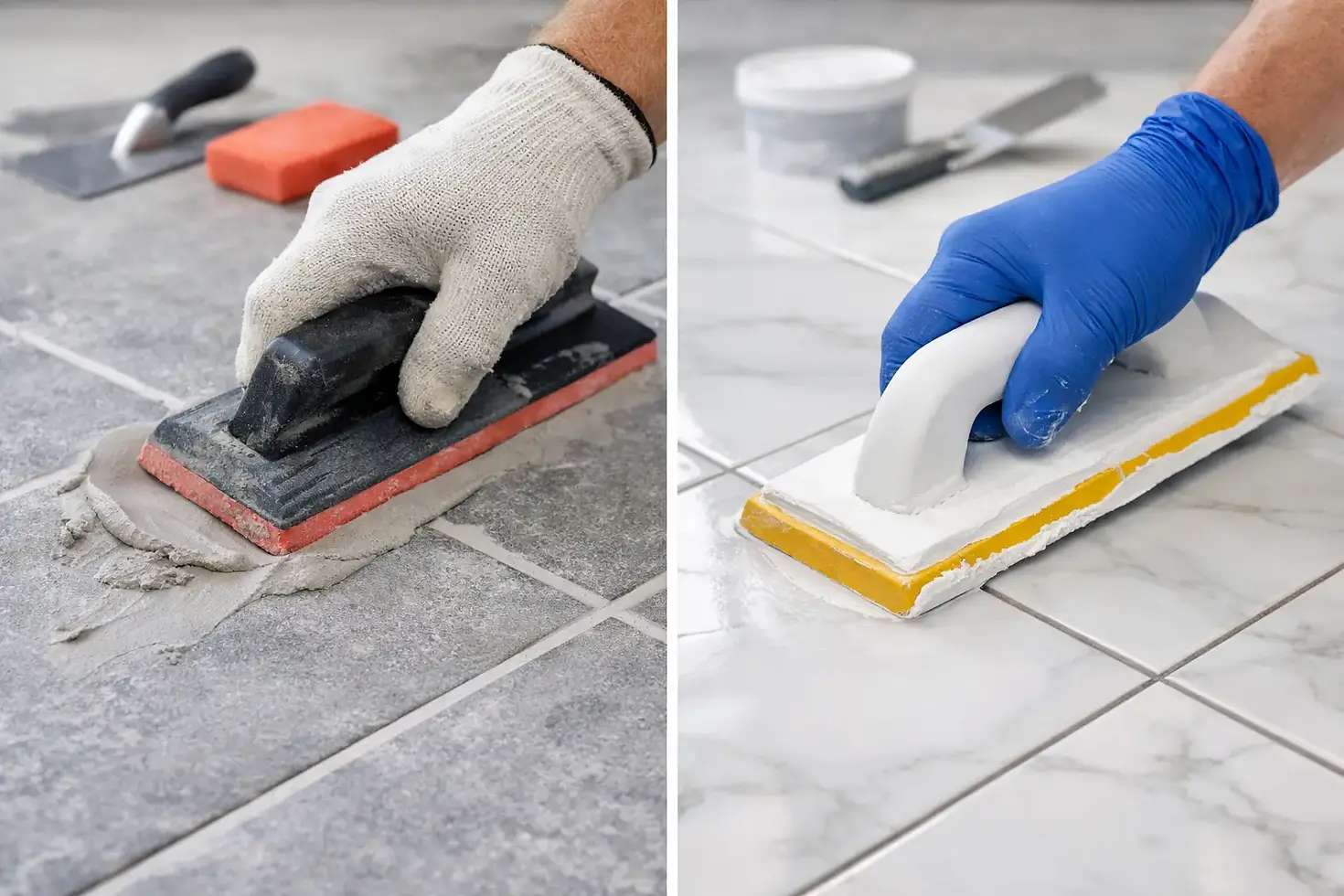
Grout vs Epoxy Grout for Your Tile Project
A tile installation can look excellent on day one and still develop staining, cracking, or difficult-to-clean joints later. The grout choice has a lot to do with that outcome. When comparing grout vs epoxy grout, the right answer depends on the room, the tile, expected traffic, maintenance expectations, and how the installation is prepared.
Standard cement-based grout remains the practical choice for many residential tile projects. Epoxy grout offers a higher level of stain and chemical resistance, but it costs more and requires more skill to install correctly. Neither product can compensate for poor substrate prep, incorrect joint sizing, or missing waterproofing behind a shower wall.
Grout vs Epoxy Grout: The Working Difference
Traditional grout is generally cement-based. It is mixed with water or a manufacturer-approved additive, worked into tile joints, and cured over time. Sanded grout is commonly used for wider joints, while unsanded grout is used for narrow joints and materials that can scratch, such as polished stone or certain glass tile.
Cement grout is proven, widely available, and available in a broad range of colors. It is also more forgiving during installation. A qualified tile contractor can shape, clean, and finish the joints efficiently, which helps control labor costs on larger floors, backsplashes, and wall installations.
Epoxy grout is made with epoxy resins and fillers instead of Portland cement. Once cured, it creates a dense joint that resists moisture absorption, food stains, household chemicals, and many common cleaning products far better than standard cement grout. It is not simply upgraded grout in a tube. Its working time, cleanup requirements, and installation process are different.
Because epoxy begins to set quickly, installers must work in manageable sections and clean the tile surface at the proper time. If residue is allowed to cure on the face of the tile, removing it can be difficult. This is one reason epoxy grout is best handled by an installer familiar with the specific product and the tile being used.
Where Cement Grout Makes Sense
For many interior projects, a quality cement grout is the sensible, cost-effective option. It works well on kitchen backsplashes, low-traffic bathroom walls, fireplace surrounds, and residential floors where normal cleaning and periodic maintenance are realistic.
Modern high-performance cement grouts often include polymers that improve color consistency and stain resistance compared with older products. They are not maintenance-free, but they can perform well when installed over a stable substrate with properly sized joints.
Cement grout should usually be sealed when the product manufacturer recommends it. Sealer helps reduce absorption and makes cleanup easier, but it does not make cement grout completely stain-proof or waterproof. Light-colored grout around a busy cooktop, shower floor, or entry can still show soil over time.
Cement grout is also easier to repair when a small area is damaged. Matching an existing grout color is not always perfect, especially after years of use, but localized touchups are generally more straightforward than with epoxy. For a homeowner balancing appearance, budget, and future serviceability, that matters.
Where Epoxy Grout Earns Its Higher Cost
Epoxy grout is often worth considering where the tile joints will face repeated moisture, staining, grease, or aggressive cleaning. Shower floors, steam shower areas, commercial restrooms, restaurant service spaces, laundry rooms, and heavily used kitchen counters are common examples.
In a shower, epoxy grout can make routine cleaning easier because it is much less absorbent than cement grout. Soap residue and body oils can still collect on the surface, so it still needs regular cleaning. The advantage is that contaminants are less likely to soak into the grout joint itself.
For commercial tile work, epoxy can be a practical investment where downtime and ongoing maintenance are expensive. A breakroom floor, public restroom, or food-service area may be cleaned frequently and exposed to spills that would discolor conventional grout. The higher initial labor and material cost can be justified by better long-term performance.
Epoxy is also a strong choice for light grout colors in high-use locations. White or pale gray joints can look sharp next to porcelain, marble-look tile, or mosaic, but conventional grout in those colors requires more attention. Epoxy gives the finished surface a better chance of staying close to its original color.
There are trade-offs. Epoxy grout is more expensive, less forgiving to install, and can have a slightly different texture or appearance than cement grout. Some installers and owners also prefer the traditional look of cement grout for natural stone. The best choice should fit the material and the space, not just the product label.
Do Not Confuse Grout With Waterproofing
One of the most costly misconceptions in tile work is assuming grout makes a shower waterproof. It does not. Even epoxy grout should not be treated as the waterproofing system behind a shower wall or under a shower floor.
A reliable wet-area installation starts with proper substrate preparation, a correctly installed waterproof membrane, sound drain details, and appropriate movement joints. Tile and grout are the finished wear surface. They protect the assembly and provide the appearance, but the waterproof system behind them protects the building.
This distinction is especially important during bathroom remodeling. If water is reaching framing, drywall, or subflooring, replacing grout alone may not solve the problem. A professional assessment can determine whether the issue is surface maintenance, failed caulk at a change of plane, loose tile, or a deeper waterproofing failure.
Joint Size, Tile Type, and Movement Still Matter
Grout selection begins after the tile layout and joint width are established. Large-format porcelain may use narrow, consistent joints, while handmade tile, mosaics, and natural stone often need wider joints to accommodate size variation. The grout must be approved for that joint width and compatible with the tile surface.
Natural stone deserves extra attention. Honed marble, travertine, and other porous materials can be sensitive to pigments, resins, and cleanup methods. A test board is a smart step when using epoxy or a strongly colored grout with delicate stone. It allows the installer and owner to confirm the finished color, texture, and cleanability before the full installation begins.
Movement joints are another separate requirement. Corners, wall-to-floor transitions, changes in material, and certain large field areas need flexible sealant or engineered movement accommodation, not rigid grout. Epoxy grout is durable, but it does not eliminate movement in the building. Grouting those areas solid can lead to cracking or tile failure.
Choosing the Right Grout for Your Project
A practical decision usually comes down to the use of the room. A backsplash in a lightly used kitchen may perform well with quality cement grout and appropriate sealing. A shower floor used every day, or a commercial restroom that is cleaned frequently, is a stronger candidate for epoxy.
Budget should be considered honestly. Choosing epoxy everywhere can add meaningful cost, particularly on detailed mosaics or large commercial layouts. Using it strategically in demanding areas can provide better value than applying a premium material where it offers little real benefit.
The installation team should also be part of the decision. Product instructions vary, and tile type affects how easily epoxy can be cleaned from the surface. Experienced installers plan the work sequence, protect adjacent finishes, mix only what can be placed in time, and inspect the joints before the material cures.
For homeowners and property managers, the goal is not to choose the most expensive grout. It is to select a grout system that fits the tile, the environment, and the maintenance level the space will actually receive. Empire Tile & Stone approaches that choice as part of the full installation plan, including prep, waterproofing, layout, and finish details.
A well-built tile surface should look finished, clean easily, and hold up to real use. Before selecting grout, consider what happens in that space every day, then match the material to those conditions and have the work installed with the same care as the tile itself.



Comments