
Bathroom Tile Trends 2026 That Will Last
A bathroom can look current on opening day and feel dated a few years later if every decision follows a short-lived social media trend. The strongest bathroom tile trends 2026 are less about novelty and more about creating a warm, personal space with surfaces that perform well under daily use. For homeowners planning a remodel, the goal is not simply to choose a beautiful tile. It is to choose a finish, layout, and installation system that will still look right and work properly years from now.
Bathroom Tile Trends 2026: Warm, Textured, and Intentional
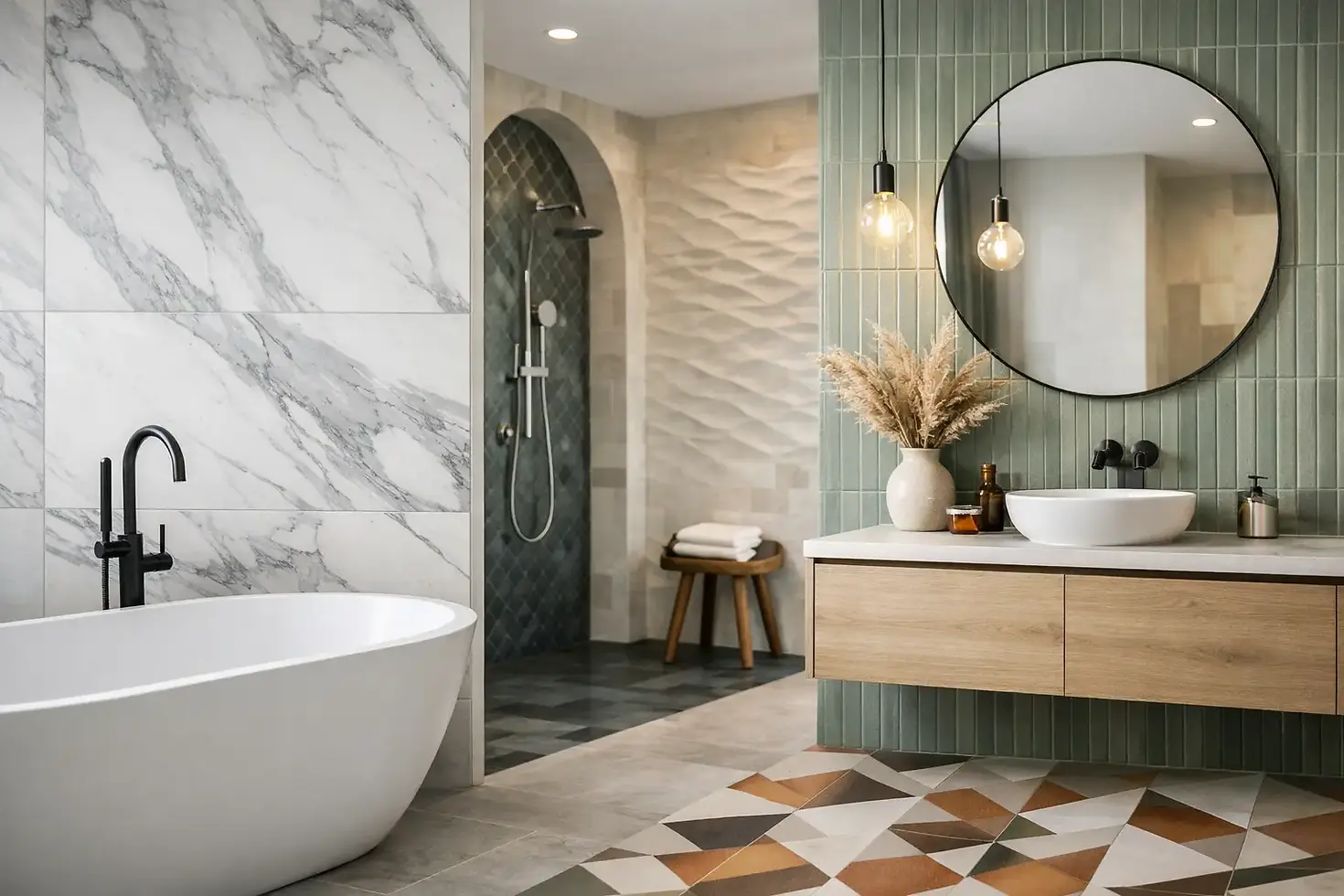
Cool gray is no longer the automatic choice for every bathroom. In 2026, the direction is warmer and more grounded: soft ivory, sand, clay, taupe, mushroom, muted olive, and deep earthy brown. These colors work especially well in California homes, where natural light and indoor-outdoor design often call for materials that feel less stark and more connected to the surrounding environment.
This does not mean every bathroom needs brown tile. Clean white bathrooms remain a strong option, especially when the homeowner wants brightness in a smaller space. The difference is in the undertone and the contrast. Warmer whites, creamy stone looks, and natural wood-tone vanities are replacing the hard white-and-gray combinations that dominated many remodels over the last decade.
Texture is another major shift. Flat glossy wall tile still has a place, particularly in easy-clean shower surrounds, but handmade-look ceramics, subtle ripples, honed stone appearances, and matte finishes add depth without demanding attention. A tile does not need a bold pattern to make a room feel finished. Variation in surface texture, grout lines, and light reflection can do that work quietly.
The trade-off is maintenance. Deeply textured tile can hold more soap residue in a shower, and rough finishes may be uncomfortable or impractical on bare feet. A material that looks handmade should still be evaluated for its intended location, its cleaning requirements, and its slip resistance.
Larger Tile, Fewer Interruptions
Large-format tile continues to be a leading choice for bathroom floors and shower walls. Porcelain panels and oversized rectangular tiles create long, cleaner visual lines with fewer grout joints. This can make a compact hall bath feel broader and can give a primary bathroom a more tailored, high-end appearance.
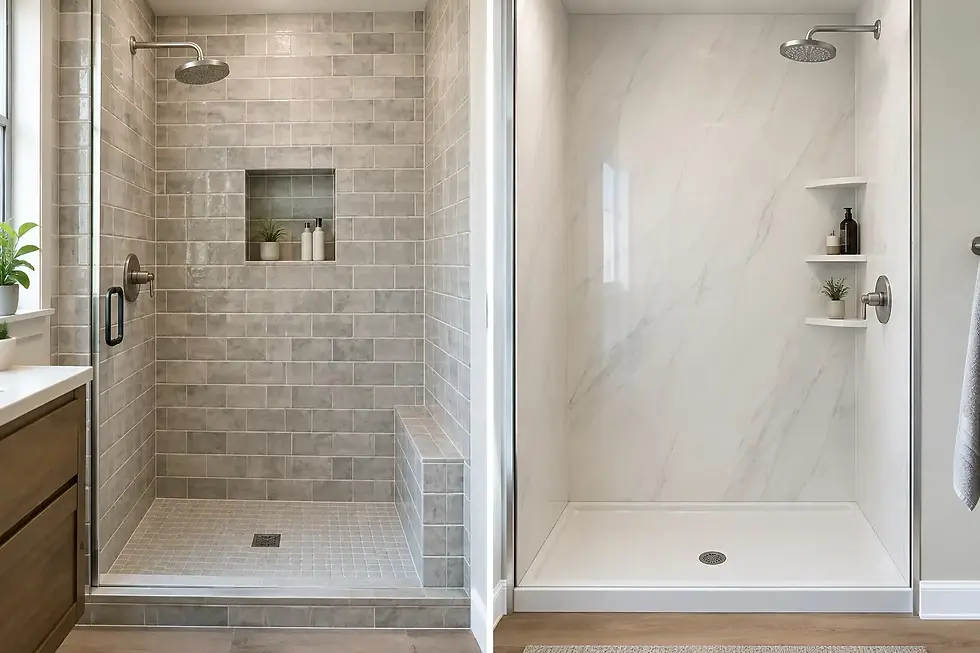
For shower walls, large-format porcelain can be an excellent solution because it reduces the amount of grout that needs regular cleaning. Stone-look porcelain is particularly practical for homeowners who want the appearance of natural marble or limestone without the same level of sealing and sensitivity to staining.
Size alone does not determine whether a tile is right for a room. Very large tile requires careful planning, flat substrates, proper cuts, and experienced handling. If walls are out of plane or a floor has uneven areas, installation problems become more visible with larger pieces. A professional installer should inspect the prep work before tile selection is finalized, not after materials have been delivered.
Smaller formats are not going away. Mosaic tile remains useful on shower floors because the additional grout joints can improve traction and allow the tile to follow the slope toward the drain. Smaller tile also gives designers more control around niches, benches, curved details, and compact bathroom layouts.
Custom Showers Move Beyond Basic White
The shower is becoming the visual center of the bathroom, but the best designs balance appearance with function. In 2026, many homeowners are using one main field tile across the shower walls, then adding a controlled contrast at the niche, back wall, shower floor, or bench face. The result feels custom without looking busy.
Vertical stacked tile is a popular choice when the goal is to add height. Long rectangular tile set vertically can make a standard shower feel taller, while a horizontal layout can widen a narrow shower. Herringbone and chevron patterns still have value, but they are strongest as an accent. Covering every wall in a complex pattern can overwhelm a smaller bathroom and significantly increase labor, material waste, and layout time.
Slab-style shower walls are also gaining attention. Porcelain panels and large stone slabs create a minimal-joint look that suits contemporary bathrooms. They can be striking, but they require precise fabrication, proper wall preparation, and a plan for openings, corners, plumbing fixtures, and future service access. This is not a place to cut corners on installation.
A shower renovation should also begin behind the tile. Waterproofing, slope, drain placement, substrate preparation, and movement management determine whether the finished shower lasts. Tile and grout are finish materials, not the waterproof barrier. A beautiful shower that is not correctly waterproofed can lead to moisture damage that is far more expensive than choosing a better tile package at the start.
Natural Stone Looks With Practical Performance
Natural stone remains desirable, especially for vanity walls, fireplace-adjacent features, and high-end primary bathrooms. Marble, travertine, limestone, and slate offer real variation that porcelain cannot fully duplicate. But stone requires an honest conversation about maintenance, sealing, and expected patina.
For busy households and rental properties, porcelain that resembles natural stone is often the more practical choice. Current manufacturing has made stone-look porcelain more convincing in both color variation and surface texture. It resists water, requires less ongoing care, and works well for floors, walls, and wet areas when the correct product is selected.
The 2026 approach is less about matching every surface exactly. A porcelain floor paired with a handmade-look ceramic wall tile, for example, can create more character than using the same material from floor to ceiling. The key is keeping the color palette connected so the combination feels intentional.
Quiet Grout and Better Details
Grout is getting less attention as a color statement and more attention as part of the finished system. Tone-on-tone grout helps larger wall fields look calm and continuous, while a slightly darker grout can add definition to a white tile installation and make routine cleaning more forgiving.
High-contrast black grout against white subway tile is still appropriate for certain styles, but it is no longer the default. It highlights every line, every cut, and every inconsistency in the wall. That can be effective in a carefully planned design, but it requires precise layout and clean execution.
Details matter even more when the overall tile design is simple. Well-placed tile cuts, properly aligned grout joints, finished edges, centered fixtures, and clean transitions at the shower curb separate a professional installation from one that only looks good from across the room. Recessed niches, linear drains, and flush transitions can add function, but each should be planned before demolition begins.
How to Choose a Trend That Fits Your Bathroom
Start with the way the bathroom is used. A primary bath may support a more refined material mix and a larger shower layout. A guest bath may benefit from durable porcelain, straightforward cleaning, and a design that appeals to future buyers. For a commercial restroom or multifamily property, durability, slip resistance, maintenance, and replacement availability often matter more than a highly customized pattern.
Next, consider lighting. A matte charcoal tile may look dramatic in a showroom but can make a windowless bathroom feel closed in. Conversely, a glossy tile can reflect valuable light in a small room but may show water spots more readily. Take samples home and view them in morning, afternoon, and artificial light before committing.
Finally, set the budget around the full installation, not tile cost alone. Waterproofing, demolition, substrate repair, plumbing changes, trim, grout, and labor are all part of a bathroom tile project. Saving on the wrong component can compromise the result. A moderately priced porcelain tile installed over a properly prepared and waterproofed shower system is usually a better investment than expensive material installed on inadequate prep.
The most reliable trend is a bathroom built around your space, your maintenance preferences, and the level of quality you expect from the finished work. Empire Tile & Stone helps homeowners plan tile selections and installation details together, because a design only delivers value when the craftsmanship behind it is built to last.


Comments