

What Is the Best Tile for Shower Walls?
- Luis Nava
- Aug 1
- 5 min read
A shower can look finished on day one and still fail years too soon if the material selection and preparation are wrong. The best tile for shower walls is usually porcelain, but the right choice also depends on the shower’s design, the amount of maintenance you want, and the waterproofing system behind it.
Tile is the visible finish. It is not the waterproof barrier. A properly built shower requires sound wall preparation, a compatible waterproofing membrane, correctly placed seams and penetrations, and careful installation around valves, niches, benches, and corners. That foundation matters as much as the tile you select.
Best Tile for Shower Walls Starts With Porcelain
Porcelain tile is the most dependable choice for most shower walls. It is dense, highly water-resistant, durable, and available in an extensive range of colors, textures, and formats. Homeowners can get the look of natural marble, limestone, concrete, wood, or handmade ceramic while keeping maintenance manageable.
For busy bathrooms, porcelain is hard to beat. It does not require sealing in the way natural stone does, and it holds up well to regular cleaning and daily moisture. It is also a practical choice for primary bathrooms, rental properties, guest baths, and commercial restroom or locker room applications where long-term durability matters.
Porcelain works especially well in large-format designs. Larger tiles create fewer grout joints, which gives shower walls a cleaner appearance and reduces the amount of grout that needs routine cleaning. A large porcelain tile can make a compact shower feel more open, but it requires flat, properly prepared walls. Without precise substrate work, large tiles can show uneven lippage or leave inconsistent joints.
Ceramic Tile Is a Strong Value Option
Ceramic tile can also perform well on shower walls, particularly in standard-sized formats and decorative applications. It is generally less dense than porcelain but is still suitable for vertical shower surfaces when it is rated for the intended use and installed over a proper waterproofed assembly.
Ceramic is often a good fit for classic subway tile, colorful wall tile, and smaller decorative patterns. It can be more budget-friendly than porcelain, and the selection of shapes and glazes is broad. The trade-off is that ceramic may be more prone to chipping from impact, and some options are less suitable for demanding environments than porcelain.
For a shower wall that gets daily use, select quality tile from a reputable manufacturer and do not let a lower material cost lead to shortcuts in preparation or waterproofing. The labor behind a shower installation is the part that protects the home.
Natural Stone Brings Character, With More Maintenance
Natural stone creates a finish that manufactured tile cannot fully duplicate. Marble, travertine, limestone, slate, and quartzite each have variation in color, veining, and texture. For homeowners building a custom shower with a high-end, organic look, stone can be an excellent choice.
It does require a realistic maintenance commitment. Most natural stone should be sealed, and the sealer needs periodic renewal. Some stones can be affected by acidic or harsh cleaning products. Marble and limestone, for example, can etch or dull over time, especially when exposed to products containing acids.
Stone also requires an experienced installer. Pieces often need layout planning before installation so the veining, color range, and cut edges look intentional. Corners, niches, benches, and transitions need careful detailing. A quality stone shower is not a place to rush material selection or installation.
If you like the look of stone but prefer lower maintenance, a porcelain tile with a stone-look finish is often the better long-term fit. Modern porcelain can provide convincing movement and texture without the ongoing care requirements of natural material.
Glass Tile Works Best as an Accent
Glass tile can add light, color, and detail to a shower. It is often used for a niche back, a vertical accent strip, or a feature wall. Because glass reflects light, it can make a darker shower feel brighter and give a simple design more depth.
Full glass-tile showers are possible, but they require careful planning. Glass is translucent, so inconsistencies in thinset coverage or wall color can show through. It also expands and contracts differently from ceramic or porcelain, which means the installation materials and movement joints must be appropriate. Some glass tile can show water spots and soap residue more readily than a textured porcelain surface.
For most projects, glass is strongest as a controlled design element rather than the primary wall finish. Pairing it with porcelain gives the shower visual interest while keeping the overall installation practical.
Tile Size Changes the Look and the Labor
The best size for shower wall tile depends on the room and the design, not a single rule. Large-format tile creates broad, quiet surfaces with minimal grout lines. It is a strong option for modern bathrooms and marble-look designs. It also places greater demands on wall flatness, layout, and cutting accuracy.
Standard 12-by-24-inch porcelain remains a dependable choice because it works in many shower sizes and provides a clean, balanced look. Smaller formats such as subway tile, hexagon tile, or handmade-look tile bring more pattern and texture. They also introduce more grout joints.
More grout is not automatically a problem, but it means more surface area to clean. Light grout can make a shower feel bright but may show discoloration sooner. Dark grout can add contrast and hide some day-to-day staining, though it may make mineral deposits more visible in areas with hard water. A high-quality grout and proper sealing, where applicable, help protect the finished work.
Do Not Choose Tile Without Planning the Details
A tile sample alone cannot tell you whether a shower will function well. Before making a final selection, consider the niche, bench, shower curb, ceiling height, fixtures, and the transition from wall tile to bathroom flooring. These details affect the layout, cuts, and the amount of material needed.
Tile direction matters too. Horizontal rectangular tile can make a narrow shower feel wider. Vertical installation can emphasize ceiling height. A centered layout around a valve wall or niche often looks more intentional than starting with a full tile in one corner and accepting small cuts wherever they land.
When using a patterned tile, confirm how it will align at inside corners and around openings. When using a tile with directional veining, review the layout before installation begins. Bookmatching, vein direction, and tile placement should be decided early, not after the walls are already set.
The Waterproofing System Matters More Than the Surface
Even the best porcelain tile cannot correct an improperly built shower. Grout and tile are not waterproof. Moisture that passes through grout joints must be managed by the waterproofing layer behind the tile and directed correctly to the shower drain system.
A professional shower installation begins with proper demolition and substrate evaluation. Walls must be stable, flat, and suitable for tile. Waterproofing should be continuous at seams, corners, fastener penetrations, niches, benches, curbs, and plumbing openings. The system must be compatible from wall to floor and drain connection.
This is particularly important in older homes across the Central Valley and Bay Area, where previous remodels may hide damaged framing, failed backer board, or outdated shower construction. Rebuilding the shower correctly may add work at the start, but it helps avoid the cost and disruption of opening finished walls later.
How to Make the Right Choice
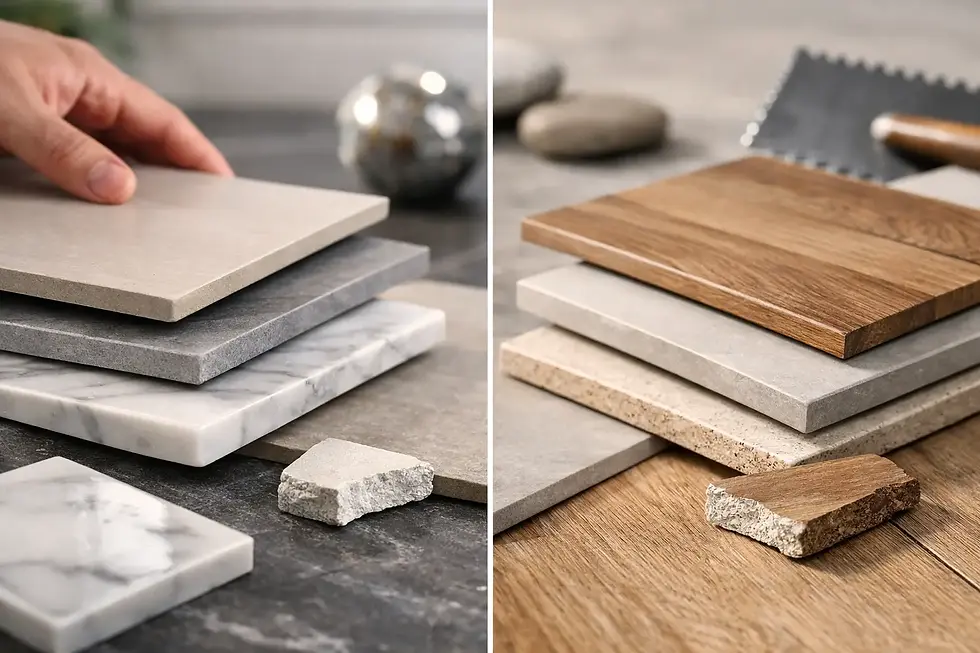
For most homeowners, porcelain tile in a size and finish that fits the bathroom is the best balance of appearance, durability, and maintenance. Ceramic is a solid option for budget-conscious designs and decorative wall tile. Natural stone is right for clients who value authentic variation and are prepared for maintenance. Glass is best used strategically for an accent or feature detail.
At Empire Tile & Stone, the tile selection is only one part of the conversation. A quality shower depends on the whole assembly: preparation, waterproofing, layout, setting materials, grout, and finishing details. Choose a tile you will enjoy seeing every day, then make sure it is installed on a shower system built to last.


Comments