

How Much to Remodel Small Bathroom With Shower
- Luis Nava
- Jul 10
- 6 min read
A small bathroom can be one of the most expensive rooms in the house on a per-square-foot basis. The space is compact, but the work is not. Plumbing, waterproofing, tile installation, shower construction, demolition, and finish work all have to come together cleanly. If you are asking how much to remodel small bathroom with shower, the honest answer is that cost depends on the level of finish, the condition of the existing space, and how much of the room is being rebuilt.
For most homeowners, a small bathroom remodel with a shower usually falls somewhere between about $12,000 and $30,000. A basic remodel may stay near the lower end if the layout remains the same and material selections are straightforward. A more custom project with tile work, upgraded plumbing fixtures, new glass, and waterproof shower construction can move well beyond that range.
How much to remodel small bathroom with shower depends on scope
The biggest pricing factor is scope. Two bathrooms can be the same size and land thousands of dollars apart because one is a cosmetic update and the other is a full rebuild.
If you are replacing finishes only, the project may include demolition, a new vanity, toilet, shower tile, fixtures, paint, and flooring. That is different from a remodel that also moves plumbing, replaces wallboard, corrects structural issues, or rebuilds the shower pan from scratch. Once walls are opened, hidden problems can add cost quickly, especially in older homes.
In practical terms, here is how many homeowners think about it. A light remodel focuses on appearance. A mid-range remodel improves both appearance and function. A higher-end remodel usually includes custom tile work, better materials, upgraded waterproofing, and more detailed installation.
Typical cost ranges for a small bathroom remodel
A basic small bathroom with a shower often runs around $12,000 to $18,000. This usually means keeping the same layout, using standard fixtures, choosing stock or builder-grade materials, and limiting custom work.
A mid-range project often lands between $18,000 and $25,000. That budget may include a tiled shower, quality waterproofing, a better vanity, improved lighting, updated plumbing trim, and more durable finishes.
A custom or higher-end remodel can start around $25,000 and go upward from there. This is where you see full shower systems, premium tile, frameless glass, recessed niches, bench seating, upgraded drains, and stronger design detail throughout the room.
Where the money goes in a small bathroom remodel
Homeowners are often surprised that labor and preparation take such a large share of the budget. In a bathroom, what sits behind the tile matters just as much as the tile itself.
Demolition and prep are the first cost layer. Removing old finishes, hauling debris, correcting subfloor or wall issues, and preparing surfaces for new work all take time. If the existing bathroom has water damage, failed backing materials, or poor previous workmanship, repair work becomes part of the remodel whether it was in the original plan or not.
The shower is usually the cost center. A properly built shower requires waterproofing, slope, drain integration, wall prep, tile setting, grout, and finish details. If you are installing custom tile instead of a prefabricated surround, labor increases, but so does durability and appearance when the work is done correctly.
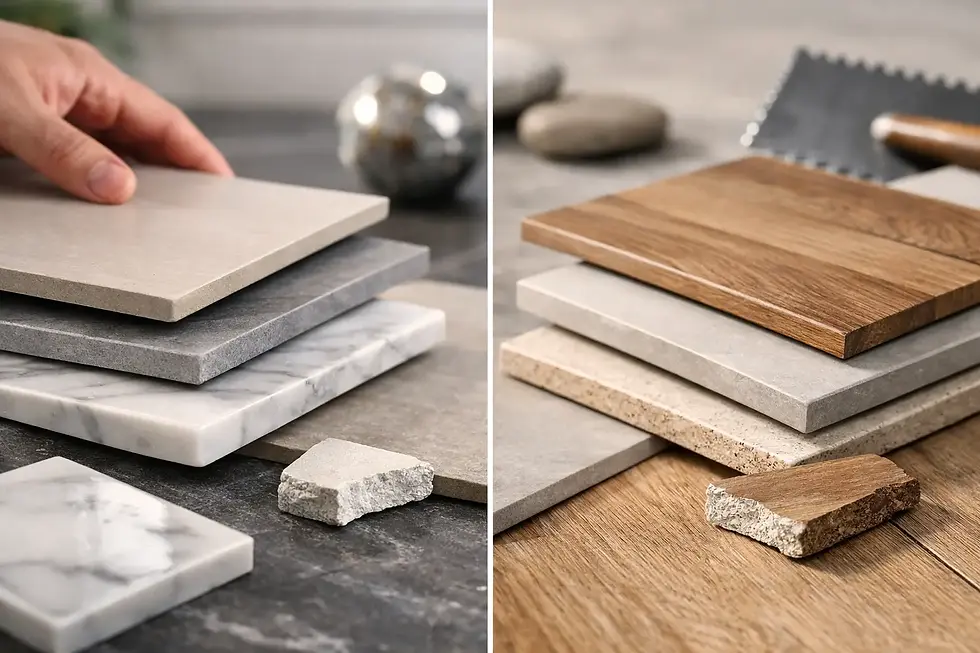
Tile and stone selection also affect price. Ceramic tile is often more budget-friendly than porcelain, and natural stone usually requires more material cost and more careful installation. Larger format tile can reduce grout lines, but it may also require flatter surfaces and more skilled setting. Mosaic floors, decorative accents, and intricate layouts add labor.
Fixtures and glass can shift the budget more than people expect. A simple shower valve and trim package costs far less than a premium thermostatic system. Standard shower doors cost less than custom frameless glass. Vanities, mirrors, and lighting vary just as widely.
Labor is not the place to cut corners
Bathrooms are unforgiving. If the tile is uneven, the floor is out of level, or the shower is not waterproofed correctly, the problem does not stay cosmetic for long. It turns into leaks, loose tile, mold risk, or damage behind the walls.
That is why experienced installation matters. A licensed, bonded, and insured contractor is not just checking a box. Proper project management, code awareness, and skilled tile and waterproofing work are what protect the investment over time.
What can raise the cost fast
Layout changes are one of the quickest ways to increase a bathroom budget. Moving a toilet, relocating a drain, shifting supply lines, or changing the shower footprint creates more plumbing work, more patching, and more coordination.
Custom showers also increase cost, though many homeowners decide they are worth it. A tiled walk-in shower with a niche, bench, linear drain, and frameless glass has a very different labor profile than a basic insert shower. The result is more tailored and often better suited to the room, but it requires greater precision.
Material upgrades add cost in smaller increments that can stack up. Better tile, premium grout, upgraded fixtures, floating vanities, heated flooring, wall-mounted faucets, and specialty lighting may each seem manageable on their own. Together, they can move a project several thousand dollars.
Older homes can create another jump in cost. In parts of California, it is common to open a bathroom and find water damage, uneven framing, outdated plumbing, or subfloor issues. None of that is glamorous, but correcting it is part of doing the work right.
What helps control the budget without lowering quality
The most effective way to control cost is to keep the layout where it is. If the toilet, shower, and vanity stay in place, you avoid much of the plumbing relocation expense.
The next step is choosing where custom work matters most. Many homeowners get the best value by investing in the shower and keeping other elements more straightforward. A well-built shower with quality waterproofing and clean tile work improves daily use and long-term performance. You do not need every finish in the room to be top-tier for the bathroom to feel finished and durable.
Material choices matter too. Porcelain tile can deliver excellent performance and design flexibility without the upkeep concerns of some natural stone products. Standard-sized tile patterns usually cost less to install than highly detailed layouts. A good contractor can help you balance appearance, longevity, and labor cost before the work begins.
How much to remodel small bathroom with shower in California
In California markets such as San Jose, Los Gatos, Saratoga, Los Altos, Atherton, and nearby areas, labor and material pricing are often higher than national averages. Permit requirements, regional labor costs, and the age of housing stock can all influence the final number.
In the Central Valley, pricing may be somewhat more moderate depending on the city and project conditions, but the same principle applies: bathrooms with quality tile work, proper prep, and dependable waterproofing are rarely bargain projects. If a bid comes in far below the rest, it is worth asking what is being left out.
Budgeting for the remodel you actually want
A realistic budget starts with priorities. If your main goal is to replace a worn-out bathroom with something clean and functional, that is one kind of project. If you want a custom shower, upgraded finishes, and a room that feels tailored to the home, that is another.
It also helps to set aside a contingency, especially in older bathrooms. A reserve of 10 to 15 percent can cover hidden conditions without forcing rushed decisions. Remodels go more smoothly when there is room to handle the unexpected.
One practical approach is to separate must-haves from nice-to-haves before estimates are finalized. Must-haves might include waterproofing, new tile, a better shower valve, and improved ventilation. Nice-to-haves could be heated floors, designer lighting, or specialty tile accents. That keeps the project aligned with the budget while protecting the core quality of the work.
The real value is in the parts you do not see
Homeowners understandably focus on tile, fixtures, and color selection. Those are the visible pieces. But the value of a bathroom remodel is built into the substrate preparation, waterproofing system, drain details, and installation quality underneath.
A shower that looks good on day one but fails in a few years is not a savings. A smaller bathroom especially needs careful execution because there is less room to hide irregularities. Tight layouts require precise measurements, clean cuts, and thoughtful planning.
That is where a specialized contractor brings value. Companies such as Empire Tile & Stone are often brought in because the client wants more than a cosmetic update. They want tile work that lasts, a shower that is built correctly, and a finished room that feels solid every time it is used.
If you are pricing a small bathroom remodel with a shower, think past the lowest number. Ask what is included, how the shower will be waterproofed, what prep work is assumed, and whether the finish level matches your expectations. A well-built bathroom costs more upfront, but it usually costs less than repairing one that was rushed or underbuilt.


Comments