
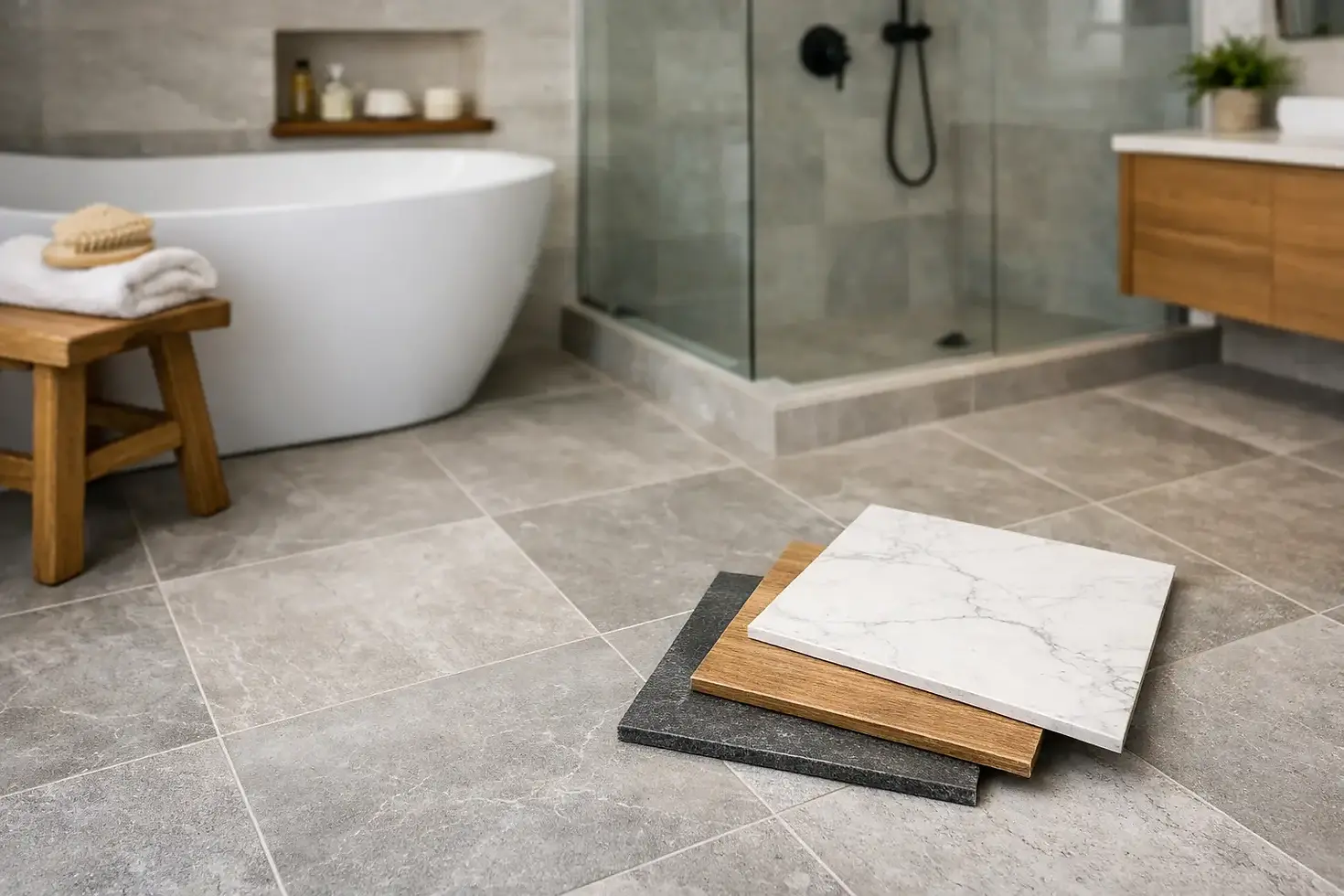
Best Tile for Bathroom Floors That Will Last
- Luis Nava
- Jul 20
- 5 min read
A bathroom floor can look finished on installation day and still become a problem years too soon. Slippery surfaces, cracked grout, water intrusion, and stains usually come down to material selection and preparation. The best tile for bathroom floors is one that fits the room’s daily use, provides reliable traction, and is installed over a properly prepared, waterproofed substrate.
For most homes, porcelain tile is the strongest all-around choice. That does not mean every porcelain tile is right for every bathroom. Finish, size, texture, grout layout, and the condition of the subfloor all affect how the completed floor performs.
Why Porcelain Is Often the Best Tile for Bathroom Floors
Porcelain tile is dense, hard, and highly resistant to water absorption. Those qualities make it well suited to bathrooms, where damp towels, shower steam, splashing, and regular cleaning are part of daily life. A quality porcelain floor can handle heavy traffic without needing the level of ongoing care required by many natural stone materials.
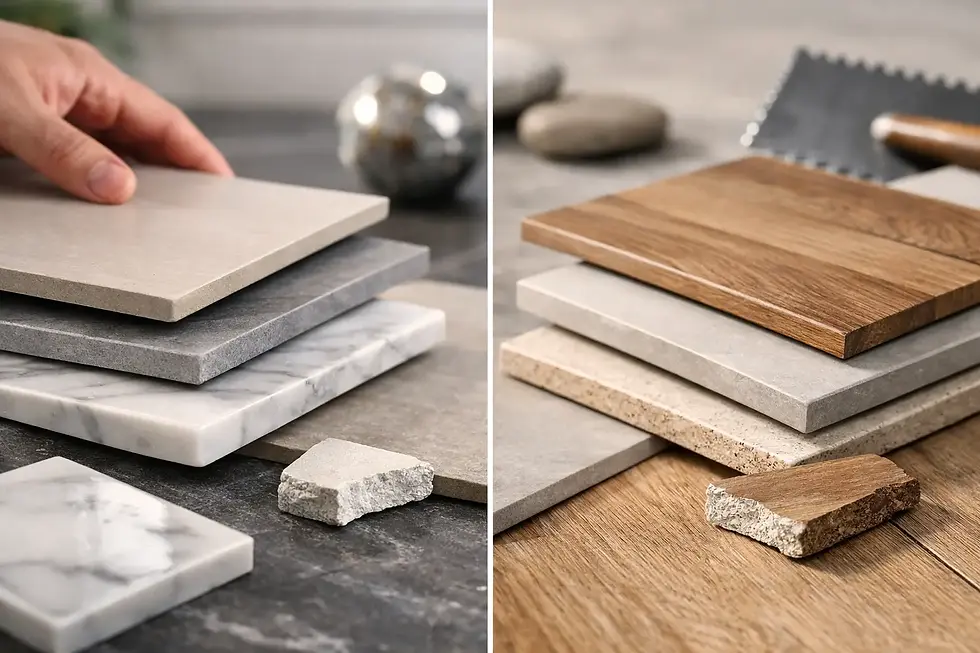
It also offers a wide range of finishes. Homeowners can choose a clean large-format look, a classic marble appearance, a warm wood-look plank, or a more textured stone-style surface without accepting the maintenance demands of the material being replicated. That flexibility is useful when a bathroom remodel needs to match existing flooring or a specific design direction.
The key is selecting a porcelain tile rated for floor use with an appropriate slip-resistant finish. A polished tile may look sharp in a showroom, but it can be less forgiving when wet. In most bathrooms, matte, honed-look, or lightly textured porcelain gives a better balance of appearance, cleanability, and footing.
Ceramic Tile: A Solid Option for Light-Use Bathrooms
Ceramic tile can be a good bathroom floor material, particularly in powder rooms, guest bathrooms, or spaces with lighter use. It is generally more budget-friendly than porcelain and comes in many colors, shapes, and patterns.
The trade-off is density and durability. Ceramic is typically more porous and less impact-resistant than porcelain. When installed correctly, it can still provide years of service, but porcelain is usually the better long-term investment for a primary bathroom, family bathroom, or rental property that sees frequent use.
Ceramic should also be selected carefully. Not every ceramic product is rated for flooring, and wall tile should never be substituted for floor tile just because the color or pattern matches. Floor-rated tile is designed to carry weight and resist wear underfoot.
Natural Stone Brings Character, With More Maintenance
Marble, travertine, slate, and limestone can create a distinctive bathroom floor that manufactured tile cannot fully duplicate. Each piece has natural variation, and a properly installed stone floor can add substantial visual value to a well-designed home.
Stone is not automatically the best choice for every bathroom. Most natural stone needs sealing, and some varieties are more sensitive to acidic cleaners, standing water, soap residue, and staining. Polished marble can also be slick when wet, while uneven cleft slate may be harder to clean around its texture.
For homeowners who want stone, the right choice depends on the specific material and finish. Honed marble, tumbled travertine, or textured slate may offer more practical footing than a high-polish surface. A professional installer can help assess whether the subfloor structure, intended use, and maintenance expectations support a natural stone installation.
Tile Size Changes Both Safety and Appearance
Large-format tiles create fewer grout joints and can make a small bathroom feel more open. They are popular in modern remodels because they provide a clean, continuous surface. However, large tile requires a flat, well-prepared floor. Even minor dips or high spots can lead to uneven edges, poor bonding, or lippage between tiles.
Smaller tiles are often the better choice in shower areas or on floors where additional traction matters. More grout joints create more grip underfoot, especially when the floor is wet. Mosaic tile is a common choice for shower floors because it can follow the slope toward the drain while providing reliable footing.
For a standard bathroom floor outside the shower, medium and large porcelain tiles can work well when paired with a matte finish. The right size is not only a design decision. It should reflect the floor’s flatness, the room layout, drain locations, and the transition to nearby rooms.
Slip Resistance Should Be Part of the Plan
A bathroom floor should not force homeowners to choose between a refined look and safe movement. Ask about the tile’s wet slip resistance before making a final selection, especially for homes with young children, older adults, or anyone with mobility concerns.
Texture helps, but overly rough tile can hold dirt and be difficult to mop. The goal is a finish with enough grip for wet conditions without creating a surface that is unpleasant to maintain. Matte porcelain and tiles with a subtle texture are often practical choices for this reason.
Grout also contributes to traction. Narrow grout joints are common with rectified tile, while slightly wider joints can add visual definition and footing. Grout color affects the final look as well. A close color match creates a quieter floor, while contrast emphasizes the tile layout and may show dirt less readily depending on the shade.
Waterproofing Matters as Much as the Tile
Tile and grout are durable finishes, but they are not a complete waterproofing system. Water can pass through grout joints and around penetrations over time. The protection behind and beneath the tile is what helps prevent moisture damage to the framing, subfloor, and adjacent rooms.
A proper bathroom floor installation starts with evaluating the existing surface. The subfloor must be stable, clean, and suitable for tile. Cracked or damaged areas need to be addressed before tile is installed. Depending on the project, the installer may use an uncoupling membrane, cement board, a liquid-applied waterproofing system, or another approved assembly suited to the conditions.
This is especially important in full bathroom remodels and custom showers. Shower pans, wall-to-floor transitions, curbs, niches, and drain connections need coordinated waterproofing details. A beautiful tile selection cannot correct poor prep work underneath it.
Choose Grout for Performance, Not Just Color
Grout is a visible part of every tiled floor, and it takes regular exposure to moisture, cleaning products, and foot traffic. Cement-based grout remains a dependable option when installed and sealed as needed. High-performance or epoxy grout can offer improved stain resistance in certain applications, though it requires experienced handling and may not be necessary for every project.
A practical grout color can reduce the appearance of everyday soil between cleanings. Bright white grout with a busy household may require more maintenance than a soft gray, beige, or coordinating tone. This does not mean the floor has to look dark. It means the grout choice should match the way the bathroom will actually be used.
When Budget, Style, and Use Point in Different Directions
The most expensive tile is not always the best tile for bathroom floors. A modest, well-installed porcelain tile will usually outperform a premium material installed over an uneven or poorly prepared surface. Quality installation, proper movement joints, sound substrate preparation, and waterproofing protect the investment.
For a powder room, a decorative ceramic tile may be the right fit. For a busy hall bath, durable matte porcelain is often the practical answer. For a luxury primary bathroom, natural stone may be worth the additional care if its appearance is central to the design. Each choice can be correct when the material matches the room’s demands.
Before ordering tile, bring the full picture to the planning stage: who uses the bathroom, how often it gets wet, whether the floor needs leveling, what cleaning routine is realistic, and how the new floor will meet the shower, vanity, doorway, and surrounding rooms. Empire Tile & Stone approaches those details as part of the installation, not as afterthoughts. The right floor begins with the right tile, but it lasts because every layer below it is handled with precision.


Comments